
A 1956 Heywood-Wakefield, back to Wheat
A genuine 1956 birch dining table, arrived with failing lacquer and water rings deep into the grain. Restored to the Wheat glow Heywood-Wakefield is known for.
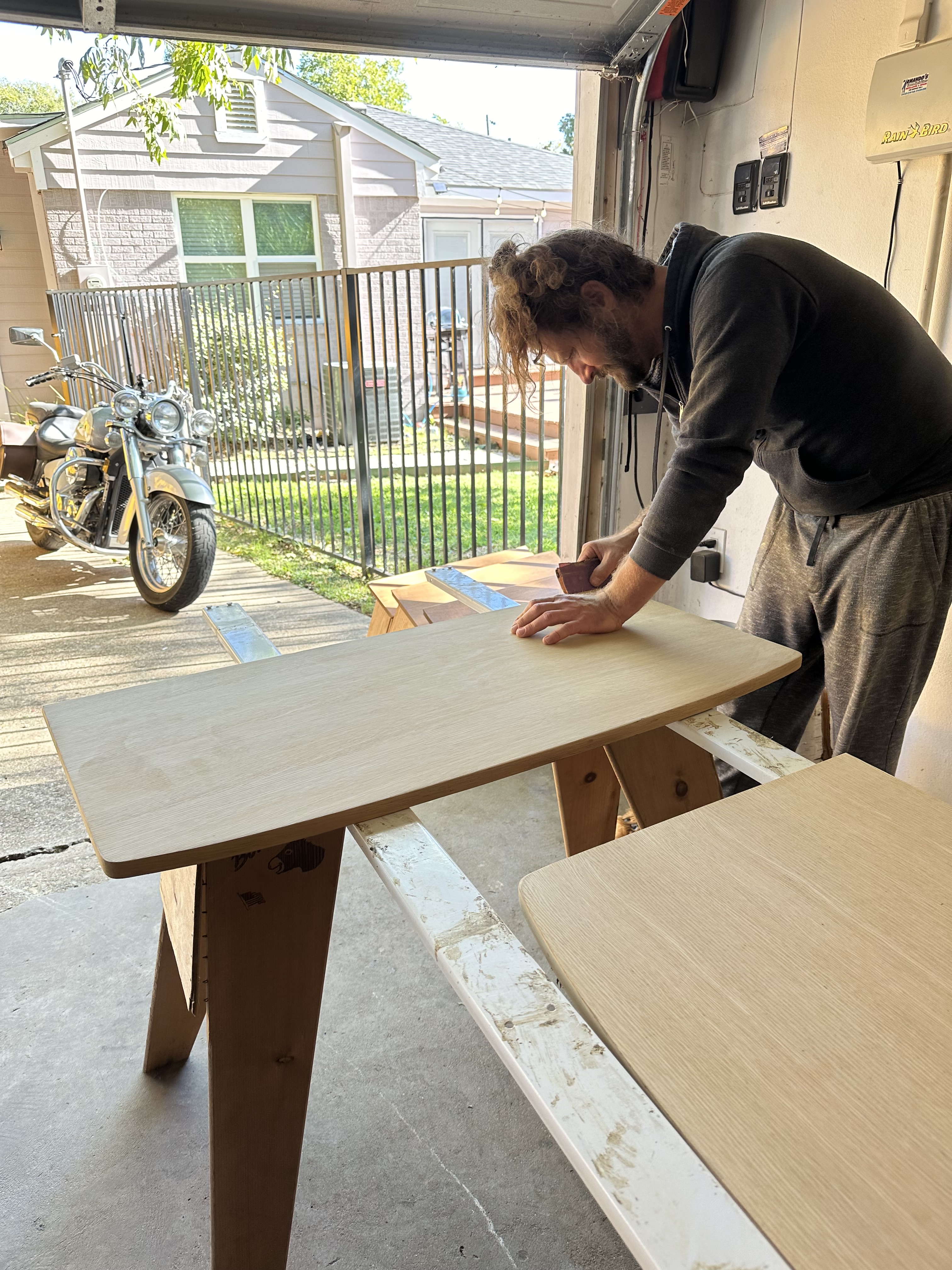
Finding an honest 1956 Heywood-Wakefield dining table in the Dallas-Fort Worth area is rare. Finding one that hasn’t been weathered by seventy years of Texas humidity — or refinished badly along the way — is rarer. This one arrived with its original joinery intact but a finish in failure: deep water rings bloomed into the grain, the topcoat crazing in the corners, the signature Wheat glow dulled almost to gray.
Restoring Heywood-Wakefield isn’t generic refinishing. The pieces were built of solid birch, not veneered, and birch behaves differently than the walnuts and teaks most mid-century furniture uses. Its grain is tight and cool. Pure yellow toners read green on birch. Stock stains read muddy. The original Heywood finishes — Wheat, Champagne, Sable — were careful balances of amber and red-brown dyes sprayed as thin toners over sealed wood. Matching them is a chemistry problem before it’s a craft problem.
The work started with a careful strip. The failed topcoat came off in layers; the water rings came out with a sanding pass that stopped short of the veneer-grade birch surface. Any sooner and the color wouldn’t have come up; any later and I’d have been shaping the wood instead of cleaning it.
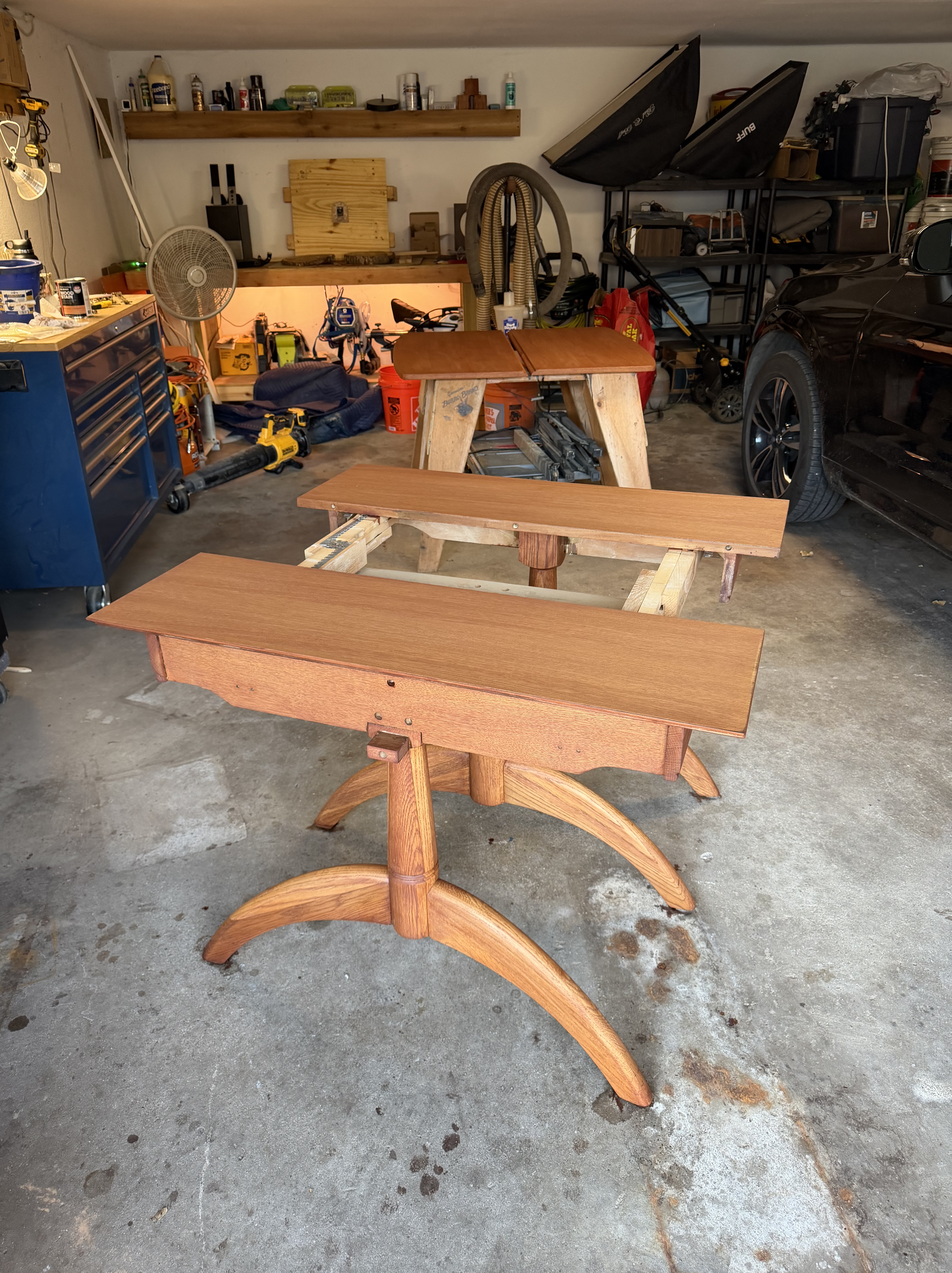
Next, the joints. A seventy-year-old table has been pulled and pushed a thousand times, and the corner blocks that hold the apron to the top had loosened. Each one got pulled, cleaned of its original glue, and re-glued. When I put the clamps on, I could feel the table become a single piece again.
Then the color. The client wanted the original Wheat tone — the warm, golden-amber glow that the 1956 catalog shows. Getting there took a custom toner blend: three drops TransTint Honey Amber to one drop Medium Brown, per pint of thinned clear lacquer. The brown is the trick. It’s what neutralizes the cool undertones in the birch and pulls the finish out of green into that unmistakable Wheat warmth. (The full recipe is here.)
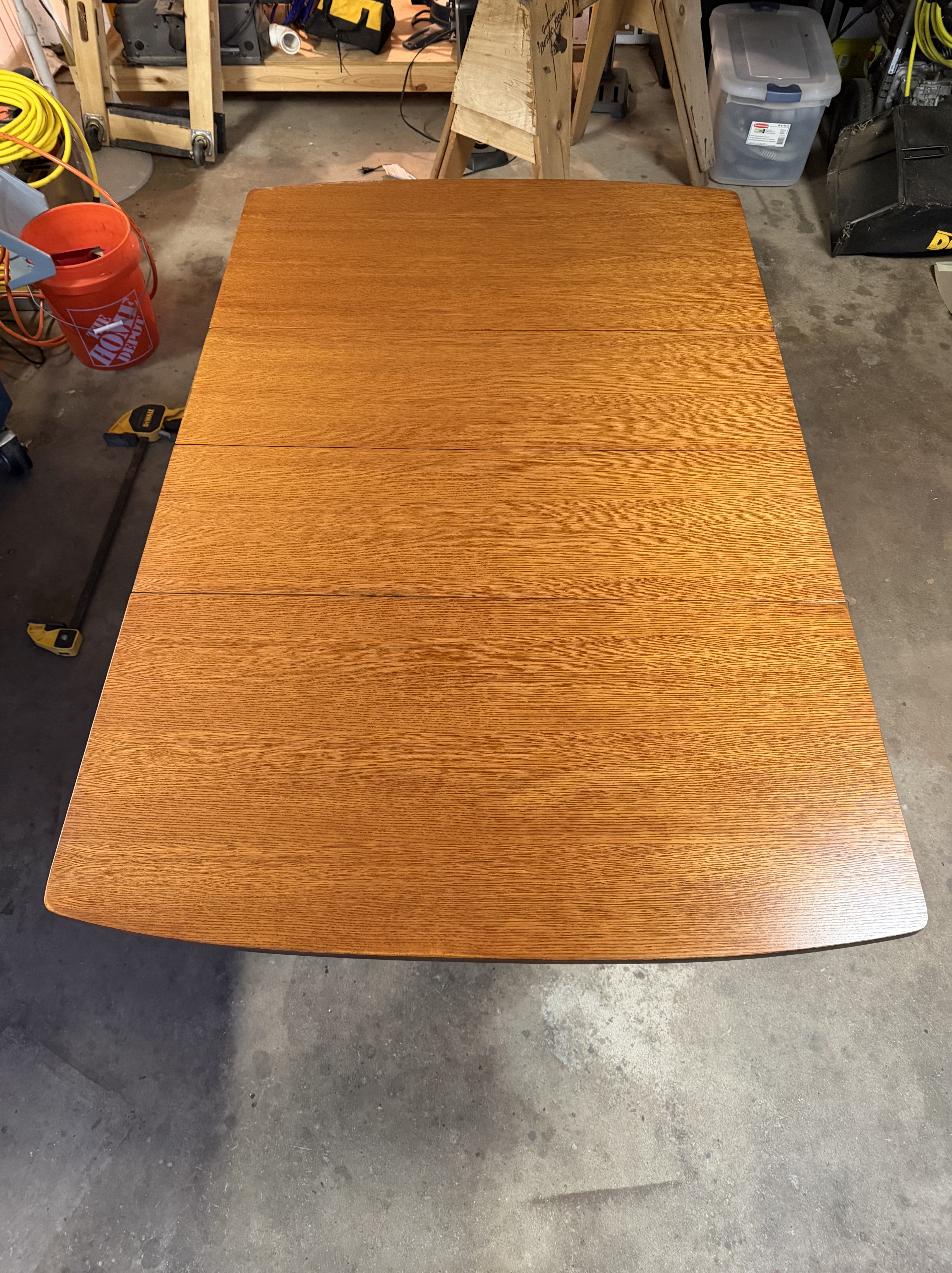
Sheer passes of toner, evaluated between each coat. Then three coats of clear, hand-rubbed between. When I stood the table up for photographs, it looked like the catalog.
The client said, when she picked it up, that it was like seeing a piece of her family’s history come back. That’s the reason to do this work. It’s not to make a table look new — it’s to give a piece its full life back.
More from the shop
See recent projects, browse services, or send in your own piece.