
Bringing a cedar fence back, Oak Cliff
A modern horizontal cedar fence, silver from UV and green along the bottom, brought back to warm in three stages. A reminder that not everything weathered needs replacing.
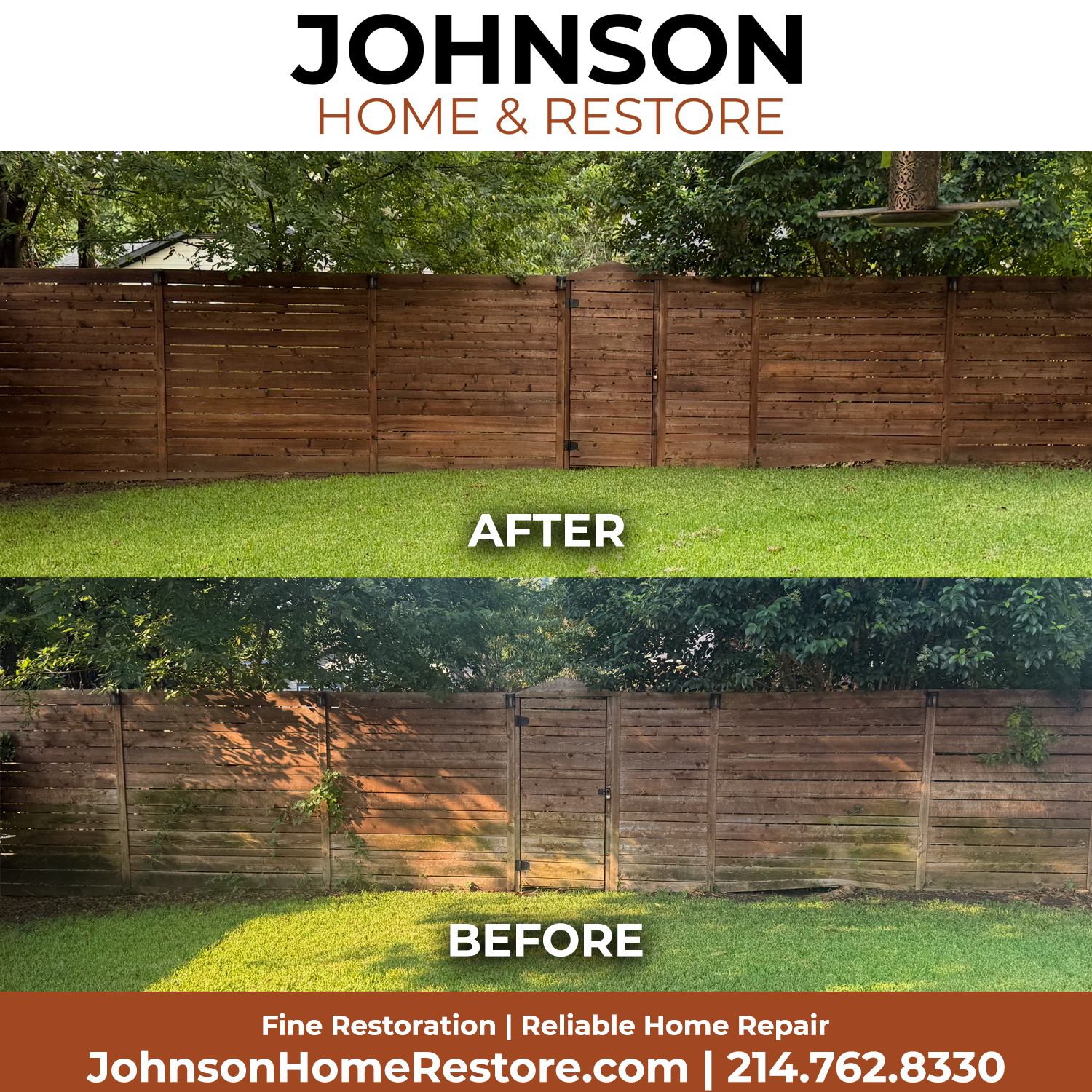
The fence was a nice one — modern horizontal slats, cedar, good lines. The kind of detail a homeowner chooses deliberately, the kind that sets the tone of a back yard. By the time I saw it, the Texas sun had turned the boards silver-gray and the bottom rows were stippled with algae where the sprinkler system threw water against them every other morning.
The homeowner had been quoted to tear the whole thing out. That’s the default recommendation in this city, and in this case it was wrong. The cedar was sound. The design was the design. What had failed was the finish, not the wood.
Restoration on a fence like this runs in three stages, and the order matters.
First, the algae. A specialized bleach solution goes on wet and sits long enough to kill the organic growth at the root. Skip this and the green spots will bleed through whatever goes on top of them a year later. It’s the same reason you treat a water stain on a ceiling before you paint.
Second, the pressure wash. The goal is to strip the dead, UV-damaged gray fibers off the face of the boards without furring the underlying wood. Too much pressure and the grain opens up; too little and you’re painting over the same tired cedar. Done right, the raw wood comes forward again — pale, fresh, ready to take finish.
Third, a penetrating stain that seals as it colors. One pass, worked into the grain with a roller and cut in by hand at the joints. By the time it dries the warmth is back — the kind of warmth a new cedar fence has for about eight weeks before the sun finds it again.
The difference is what you’d expect: a fence that looks like it was installed last month, sealed against the next decade of weather.
I take more restorations into the shop than onto a fence line, but the principle transfers: a lot of what looks like damage is just the finish asking to be replaced.
If you’ve got a fence in the same shape, here’s how fence cleaning and staining works at JHR — including the one test that tells you whether an old stain has to come off first.
More from the shop
See recent projects, browse services, or send in your own piece.