
The Dillingham Esprit Highboy, down to raw walnut
A 1960s Milo Baughman–designed highboy arrived with a dead finish, failing veneer, and drawers that refused to glide. The fix went deeper than paint.
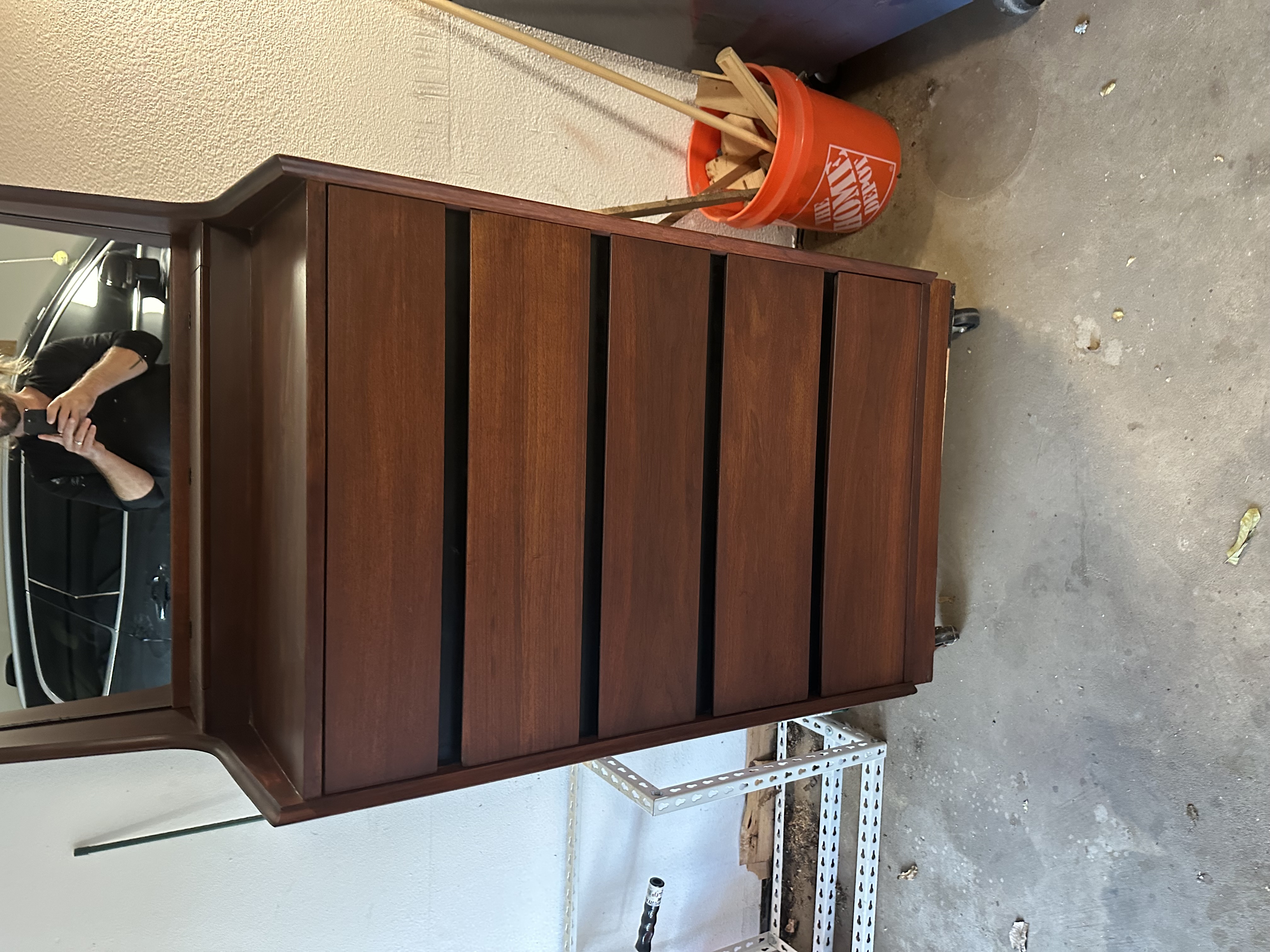
The Dillingham Esprit line has a specific look: black-lacquered drawer fronts, bold contrast lines, American walnut grain that runs warm without being ornate. Milo Baughman drew these pieces in the early 1960s, and they’re among the cleanest statements of American mid-century modernism that came out of a commercial furniture company. They were built for daily use and, sixty years later, most of them are still standing — with varying degrees of dignity.
This one arrived with its dignity tested. The original lacquer had ambered unevenly and crazed along the tops. The top-panel veneer was lifting at the edges and split along one seam. The drawers no longer rolled on their guides; they hitched and dragged the way old drawers do when the wooden runners have worn down to slopes.
A refinish would not have saved this piece. The finish was only one of its problems, and refinishing the ambered lacquer would have produced a piece that looked “done” instead of right.
The full restoration ran in three tracks, and they had to happen in order.
The first was the finish. Strip the failed lacquer back to raw walnut — chemical, not mechanical, so the veneer stays intact. Two-stage sanding, 120 then 180, hand-blocked on the flats and by hand on the curves. The original walnut comes forward: cooler than you expect, with the dark grain lines that lacquer age had obscured.
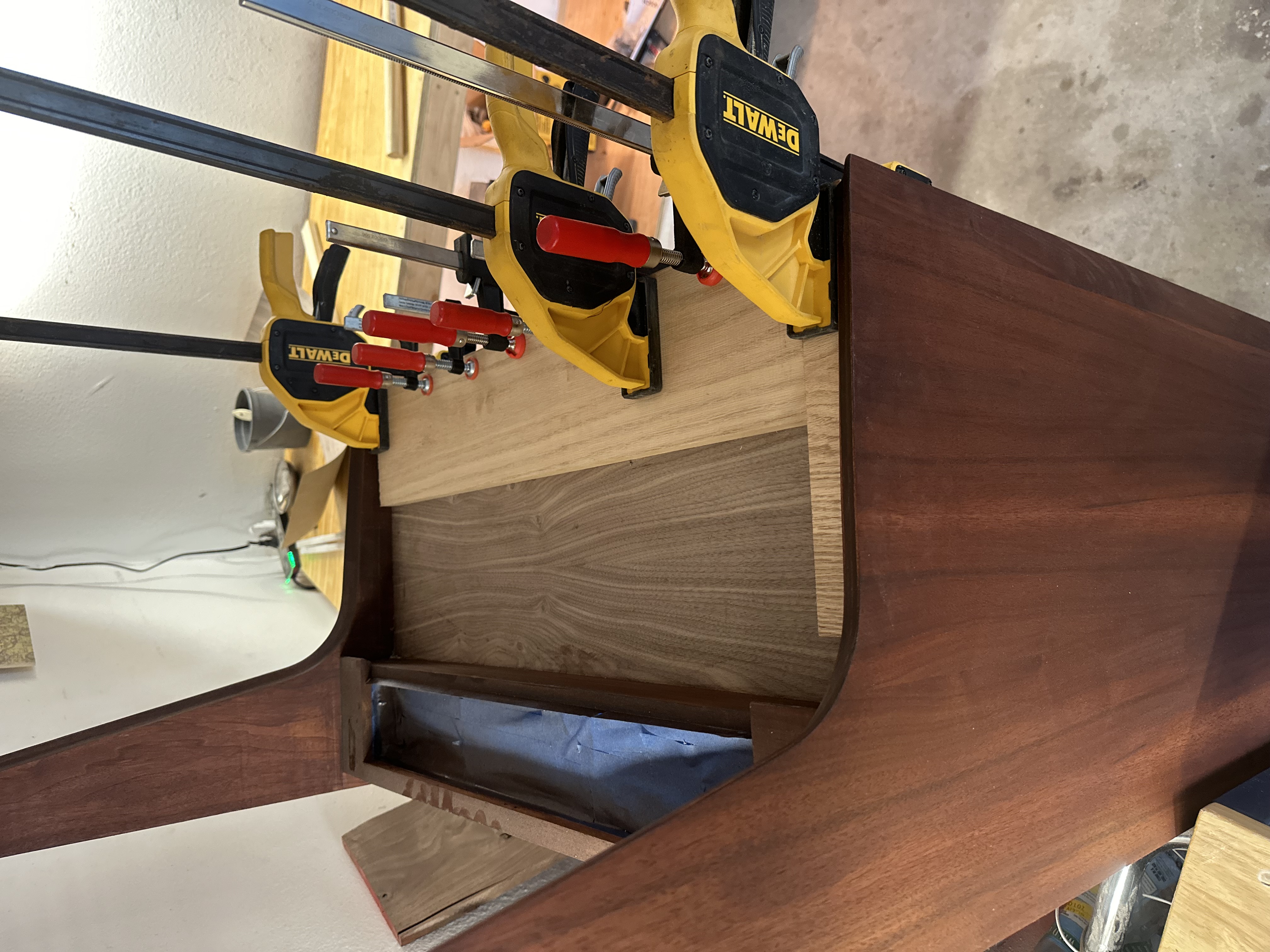
The second was the veneer. The top-panel veneer was too far gone to stabilize. I sourced a matching walnut veneer — grain direction, figure, thickness — and replaced the top. Veneer work on MCM pieces is fussy: the grain has to read as continuous, and the seam has to sit flush. Done right, you cannot find it.
The third was the mechanical work. Every drawer came out. Old runners got planed straight and paraffin-waxed; failed hardware got replaced with period-correct brass. The drawers now close with the soft compression a properly fitted drawer is supposed to have, instead of the thunk of a tired one.
After the structural work, the new finish. Three coats of oil-based polyurethane, hand-rubbed between with 0000 steel wool, taking the sheen down to the satin the piece was built to have. Black-lacquered accents brought back. Brass cleaned and reset.
What came out is the piece the way Baughman designed it, not the way it had weathered. The client’s drawers open. The walnut glows. The piece has another sixty years in it, which is what restoration is actually for.
More from the shop
See recent projects, browse services, or send in your own piece.